The New Seven Wonders of the World – What Makes Each One a True Wonder?
On July 7, 2007, in Lisbon, the New Seven Wonders of the World were announced based on more than 100 million votes. Here's something most people don't know: the Pyramids of Giza, the only surviving Wonder of the Ancient World, weren't even among the candidates when the modern list was put together. We take a closer look at which seven sites made the cut – and why Egypt didn't.
How was the list created?
The New7Wonders Foundation launched its initiative in 2001 with the goal of using internet and phone voting to select the world's seven most outstanding man-made wonders from a pool of 200 nominees. The project was controversial among experts, since the voting was easy to manipulate – a single person could vote multiple times – yet it still drew massive international attention, and remains one of the best-known lists of its kind to this day.
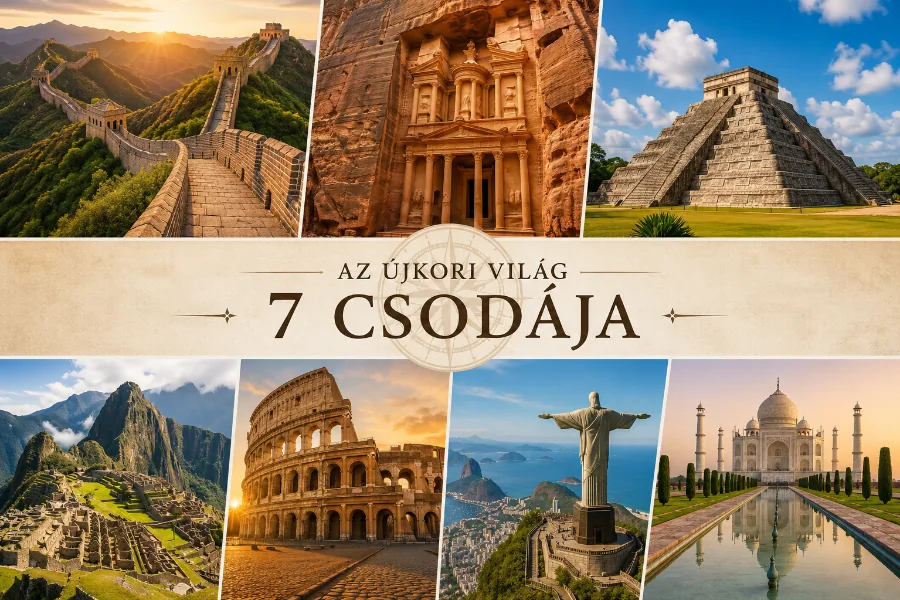
The Great Wall of China
One of the world's most famous structures, originally built as several separate sections over centuries to protect China from northern invasions. Its total length is disputed but estimated at several thousand kilometers, and significant stretches remain walkable today, including sections near Beijing.
Petra, Jordan
This ancient city carved into rock was the capital of the Nabataean kingdom, best known for its Treasury facade cut into sandstone, reached through the narrow canyon path known as the Siq. The pink-red rock and the way light shifts throughout the day give the site a completely different mood depending on when you visit.
Chichén Itzá, Mexico
The central building of this Maya city on the Yucatán Peninsula is the Pyramid of Kukulkán, which produces a striking light effect during the spring and autumn equinoxes: the shadow on the staircase forms the shape of a serpent, a demonstration of the precision of Maya astronomical knowledge.
Machu Picchu, Peru
One of the best-preserved cities of the Inca Empire, built on a mountain ridge at 2,400 meters, and one the Spanish conquistadors never found – which is part of why it survived so intact. The site still features its original terraced farming system and precise stonework, with stones fitted together without any mortar.
The Colosseum, Rome
This Roman amphitheater was completed around 80 CE and could hold between 50,000 and 80,000 spectators for gladiator fights and other public events. Its complex system – including an underground level with lifting mechanisms and a carefully organized system of entrances – is one of the finest examples of Roman engineering.
Christ the Redeemer, Rio de Janeiro
Standing atop Corcovado Mountain, this 38-meter-tall statue was completed in 1931 and has since become one of Rio de Janeiro's most iconic symbols. The figure of Christ, arms outstretched, overlooks the city and Guanabara Bay, and on clear days is visible from many points at the base of the mountain.
The Taj Mahal, India
This white marble mausoleum in Agra was built by Mughal emperor Shah Jahan in memory of his late wife, in the 17th century. The symmetrical building and gardens take on different tones depending on the time of day, which is why many visitors choose to see it at dawn or sunset.
What about the Pyramids of Giza?
The Giza pyramid complex, the only surviving member of the original Seven Wonders of the Ancient World, wasn't part of the voting shortlist – instead, the New7Wonders Foundation recognized it as an honorary eighth site, to avoid comparing it directly with the modern list.
The complete list
- Great Wall of China – China
- Petra – Jordan
- Chichén Itzá – Mexico
- Machu Picchu – Peru
- Colosseum – Italy
- Christ the Redeemer – Brazil
- Taj Mahal – India
These seven sites come from entirely different eras and cultures, yet they all share one thing in common: they've each survived for centuries and still draw millions of visitors every year. Visiting all seven means traveling across several continents – but even seeing just one is worth understanding the history and engineering achievement behind it.