#273 · 1983Testimony to cultural tradition · Outstanding architectural ensemble
Situated in the Peruvian Andes, Cuzco developed, under the Inca ruler Pachacutec, into a complex urban centre with distinct religious and administrative functions. It was surrounded by clearly delineated areas for agricultural, artisan and industrial production. When the Spaniards conquered it in the 16th century, they preserved the basic structure but built Baroque churches and palaces over the ruins of the Inca city.
#274 · 1983Masterpiece of human creative genius · Testimony to cultural tradition · Natural beauty and aesthetic importance · Ecological and biological processes
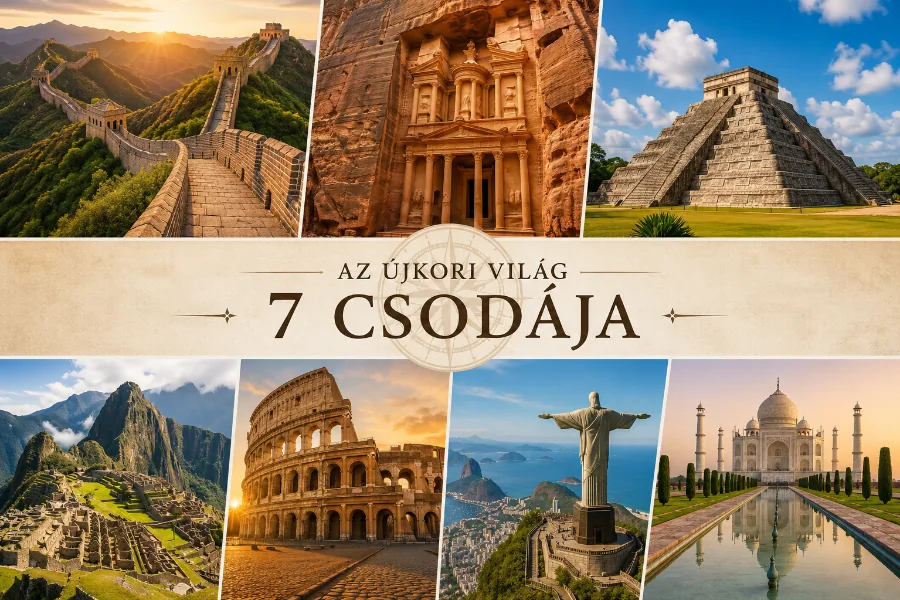
Machu Picchu stands 2,430 m above sea-level, in the middle of a tropical mountain forest, in an extraordinarily beautiful setting. It was probably the most amazing urban creation of the Inca Empire at its height; its giant walls, terraces and ramps seem as if they have been cut naturally in the continuous rock escarpments. The natural setting, on the eastern slopes of the Andes, encompasses the upper Amazon basin with its rich diversity of flora and fauna.
#330 · 1985Testimony to cultural tradition
The archaeological site of Chavin gave its name to the culture that developed between 1500 and 300 B.C. in this high valley of the Peruvian Andes. This former place of worship is one of the earliest and best-known pre-Columbian sites. Its appearance is striking, with the complex of terraces and squares, surrounded by structures of dressed stone, and the mainly zoomorphic ornamentation.
#333 · 1985Natural beauty and aesthetic importance · Earth's history and geological processes
Situated in the Cordillera Blanca, the world's highest tropical mountain range, Mount Huascarán rises to 6,768 m above sea-level. The deep ravines watered by numerous torrents, the glacial lakes and the variety of the vegetation make it a site of spectacular beauty. It is the home of such species as the spectacled bear and the Andean condor.
#366 · 1986Masterpiece of human creative genius · Testimony to cultural tradition⚠ On the Danger List
The Chimu Kingdom, with Chan Chan as its capital, reached its apogee in the 15th century, not long before falling to the Incas. The planning of this huge city, the largest in pre-Columbian America, reflects a strict political and social strategy, marked by the city's division into nine 'citadels' or 'palaces' forming autonomous units.
#402 · 1987Ecological and biological processes · Natural habitat and biodiversity
This huge 1.5 million-ha park has successive tiers of vegetation rising from 150 to 4,200 m above sea-level. The tropical forest in the lower tiers is home to an unrivalled variety of animal and plant species. Some 850 species of birds have been identified and rare species such as the giant otter and the giant armadillo also find refuge there. Jaguars are often sighted in the park.
#500 · 1988Outstanding architectural ensemble
Although severely damaged by earthquakes, this 'City of the Kings' was, until the middle of the 18th century, the capital and most important city of the Spanish dominions in South America. Many of its buildings, such as the Convent of San Francisco (the largest of its type in this part of the world), are the result of collaboration between local craftspeople and others from the Old World.
#548 · 1990Testimony to cultural tradition · Natural beauty and aesthetic importance · Ecological and biological processes · Natural habitat and biodiversity
The park was created in 1983 to protect the fauna and flora of the rainforests that are characteristic of this region of the Andes. There is a high level of endemism among the fauna and flora found in the park. The yellow-tailed woolly monkey, previously thought extinct, is found only in this area. Research undertaken since 1985 has already uncovered 36 previously unknown archaeological sites at altitudes of between 2,500 and 4,000 m, which give a good picture of pre-Inca society.
#700 · 1994Masterpiece of human creative genius · Testimony to cultural tradition · Outstanding architectural ensemble
Located in the arid Peruvian coastal plain, some 400 km south of Lima, the geoglyphs of Nasca and the pampas of Jumana cover about 450 km2 . These lines, which were scratched on the surface of the ground between 500 B.C. and A.D. 500, are among archaeology's greatest enigmas because of their quantity, nature, size and continuity. The geoglyphs depict living creatures, stylized plants and imaginary beings, as well as geometric figures several kilometres long. They are believed to have had ritual astronomical functions.
#1016 · 2000Masterpiece of human creative genius · Outstanding architectural ensemble
The historic centre of Arequipa, built in volcanic sillar rock, represents an integration of European and native building techniques and characteristics, expressed in the admirable work of colonial masters and Criollo and Indian masons. This combination of influences is illustrated by the city's robust walls, archways and vaults, courtyards and open spaces, and the intricate Baroque decoration of its facades.
#1269 · 2009Interchange of human values · Testimony to cultural tradition · Outstanding architectural ensemble
The 5000-year-old 626-hectare archaeological site of The Sacred City of Caral-Supe is situated on a dry desert terrace overlooking the green valley of the Supe river. It dates back to the Late Archaic Period of the Central Andes and is the oldest centre of civilization in the Americas. Exceptionally well-preserved, the site is impressive in terms of its design and the complexity of its architectural, especially its monumental stone and earthen platform mounts and sunken circular courts. One of 18 urban settlements situated in the same area, Caral features complex and monumental architecture, including six large pyramidal structures. A quipu (the knot system used in Andean civilizations to record information) found on the site testifies to the development and complexity of Caral society. The city’s plan and some of its components, including pyramidal structures and residence of the elite, show clear evidence of ceremonial functions, signifying a powerful religious ideology.
#1459 · 2014Interchange of human values · Testimony to cultural tradition · Outstanding architectural ensembleTransboundary site
This site is an extensive Inca communication, trade and defence network of roads covering 30,000 km. Constructed by the Incas over several centuries and partly based on pre-Inca infrastructure, this extraordinary network through one of the world’s most extreme geographical terrains linked the snow-capped peaks of the Andes – at an altitude of more than 6,000 m – to the coast, running through hot rainforests, fertile valleys and absolute deserts. It reached its maximum expansion in the 15th century, when it spread across the length and breadth of the Andes. The Qhapac Ñan, Andean Road System includes 273 component sites spread over more than 6,000 km that were selected to highlight the social, political, architectural and engineering achievements of the network, along with its associated infrastructure for trade, accommodation and storage, as well as sites of religious significance.
#1624 · 2021Masterpiece of human creative genius · Outstanding architectural ensemble
The Chankillo Archaeoastronomical Complex is a prehistoric site (250-200 BC), located on the north-central coast of Peru, in the Casma Valley, comprising a set of constructions in a desert landscape that, together with natural features, functioned as a calendrical instrument, using the sun to define dates throughout the year. The site includes a triple-walled hilltop complex, known as the Fortified Temple, two building complexes called Observatory and Administrative Centre, a line of 13 cuboidal towers stretching along the ridge of a hill, and the Cerro Mucho Malo that complements the Thirteen Towers as a natural marker. The ceremonial centre was probably dedicated to a solar cult, and the presence of an observation point on either side of the north-south line of the Thirteen Towers allows the observation both of the solar rising and setting points throughout the whole year. The site shows great innovation by using the solar cycle and an artificial horizon to mark the solstices, the equinoxes, and every other date within the year with a precision of 1-2 days. It is thus a testimony of the culmination of a long historical evolution of astronomical practices in the Casma Valley.