Egypt

Africa · Northern Africa

Back to map
Capital
Cairo
Population
116,538,258
Area
1,002,450 km²
Official language
Arabic
Currency
Egyptian pound (EGP)
Car code
ET
Traffic side
Electricity
220 V · 50 Hz
Internet domain
.eg
Membership

Overview

Egypt lies in North Africa, extending into Asia through the Sinai Peninsula, placing it at the boundary between the two continents. Most of the country is covered by desert, and the vast majority of the population lives along the Nile River and its delta, which has formed the backbone of Egyptian civilization throughout history. Ancient Egyptian civilization flourished for about 3,000 years, and monuments from the era of the pharaohs remain one of the country's main tourist attractions today. The official language is Arabic, and the population is predominantly Muslim, with a significant Coptic Christian minority.

The pyramids of Giza, including the Great Pyramid, built for Pharaoh Khufu around 2560 BC, and the Sphinx, stand on the edge of Cairo and rank among the world's most recognizable ancient monuments, forming a UNESCO World Heritage site since 1979. Luxor, on the site of ancient Thebes, includes the Karnak Temple complex and the Valley of the Kings, where the tomb of Tutankhamun was discovered by Howard Carter in 1922. The temples of Abu Simbel, built by Pharaoh Ramesses II, were relocated in their entirety to higher ground in the 1960s to save them from flooding caused by the construction of the Aswan Dam. Cairo's old town, with its Islamic-era mosques and the Khan el-Khalili bazaar, is also a UNESCO World Heritage site, preserving the legacy of medieval Islamic urban architecture.

The Red Sea coast, particularly around Hurghada and Sharm el-Sheikh, with its coral reefs and clear water, is one of the world's best-known diving destinations. Boat trips on the Nile, aboard traditional sailing dahabiyas or larger river vessels, connect the ancient sites between Luxor and Aswan. The White Desert, with limestone formations shaped by wind over thousands of years, is one of the best-known geological sights in the western desert region. Local cuisine is built around beans and rice, with koshari, a mix of rice, lentils, pasta, and spiced tomato sauce, as a signature dish, along with ful medames, stewed fava beans, traditionally eaten for breakfast.

Map

UNESCO World Heritage Sites

Browse all UNESCO sites →
Cultural

Ancient Thebes with its Necropolis

#87 · 1979Masterpiece of human creative genius · Testimony to cultural tradition

Thebes, the city of the god Amon, was the capital of Egypt during the period of the Middle and New Kingdoms. With the temples and palaces at Karnak and Luxor, and the necropolises of the Valley of the Kings and the Valley of the Queens, Thebes is a striking testimony to Egyptian civilization at its height.

Cultural

Abu Mena

#90 · 1979Outstanding architectural ensemble

The church, baptistry, basilicas, public buildings, streets, monasteries, houses and workshops in this early Christian holy city were built over the tomb of the martyr Menas of Alexandria, who died in A.D. 296.

Cultural

Memphis and its Necropolis – the Pyramid Fields from Giza to Dahshur

#86 · 1979Masterpiece of human creative genius · Testimony to cultural tradition

The capital of the Old Kingdom of Egypt has some extraordinary funerary monuments, including rock tombs, ornate mastabas, temples and pyramids. In ancient times, the site was considered one of the Seven Wonders of the World.

Cultural

Nubian Monuments from Abu Simbel to Philae

#88 · 1979Masterpiece of human creative genius · Testimony to cultural tradition

This outstanding archaeological area contains such magnificent monuments as the Temples of Ramses II at Abu Simbel and the Sanctuary of Isis at Philae, which were saved from the rising waters of the Nile thanks to the International Campaign launched by UNESCO, in 1960 to 1980.

Cultural

Historic Cairo

#89 · 1979Masterpiece of human creative genius · Outstanding traditional human settlement

Tucked away amid the modern urban area of Cairo lies one of the world's oldest Islamic cities, with its famous mosques, madrasas, hammams and fountains. Founded in the 10th century, it became the new centre of the Islamic world, reaching its golden age in the 14th century.

Cultural

Saint Catherine Area

#954 · 2002Masterpiece of human creative genius · Testimony to cultural tradition · Outstanding architectural ensemble

The Orthodox Monastery of St Catherine stands at the foot of Mount Horeb where, the Old Testament records, Moses received the Tablets of the Law. The mountain is known and revered by Muslims as Jebel Musa. The entire area is sacred to three world religions: Christianity, Islam, and Judaism. The Monastery, founded in the 6th century, is the oldest Christian monastery still in use for its initial function. Its walls and buildings of great significance to studies of Byzantine architecture and the Monastery houses outstanding collections of early Christian manuscripts and icons. The rugged mountainous landscape, containing numerous archaeological and religious sites and monuments, forms a perfect backdrop to the Monastery.

Natural

Wadi Al-Hitan (Whale Valley)

#1186 · 2005Earth's history and geological processes

Wadi Al-Hitan, Whale Valley, in the Western Desert of Egypt, contains invaluable fossil remains of the earliest, and now extinct, suborder of whales, Archaeoceti. These fossils represent one of the major stories of evolution: the emergence of the whale as an ocean-going mammal from a previous life as a land-based animal. This is the most important site in the world for the demonstration of this stage of evolution. It portrays vividly the form and life of these whales during their transition. The number, concentration and quality of such fossils here is unique, as is their accessibility and setting in an attractive and protected landscape. The fossils of Al-Hitan show the youngest archaeocetes, in the last stages of losing their hind limbs. Other fossil material in the site makes it possible to reconstruct the surrounding environmental and ecological conditions of the time.

Data: UNESCO WHC · CC BY-SA 4.0

Related blog posts

All blog posts →

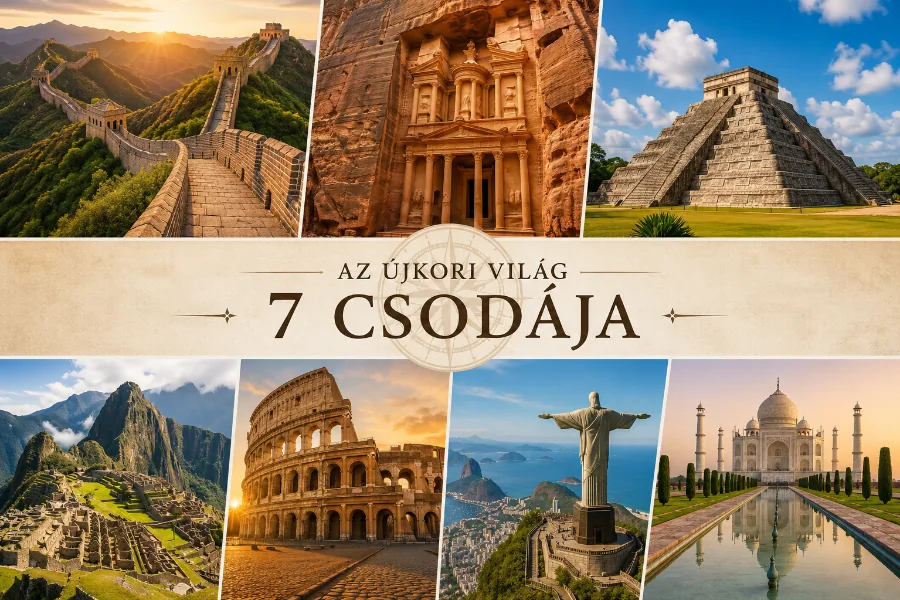
The New Seven Wonders of the World – What Makes Each One a True Wonder?

On July 7, 2007, in Lisbon, the New Seven Wonders of the World were announced based on more than 100 million votes. Here's something most people don't know: the Pyramids of Giza, the only surviving Wonder of the Ancient World, weren't even among the candidates when the modern list was put together. We take a closer look at which seven sites made the cut – and why Egypt didn't.

The New Seven Wonders of the World – What Makes Each One a True Wonder?

Frequently asked questions

What is the capital of Egypt?

The capital of Egypt is Cairo.

What is the area of Egypt?

The area of Egypt is 1,002,450 km².

What is the population of Egypt?

The population of Egypt is 116,538,258.

What is the currency of Egypt?

The currency of Egypt is Egyptian pound (EGP).

What is the official language of Egypt?

The official language of Egypt: Arabic.

What side of the road does Egypt drive on?

Egypt: Right-hand traffic.

Is Egypt a member of the United Nations?

Yes, Egypt is a member of the United Nations.