Slovakia is a landlocked country in Central Europe, bordered by the Czech Republic, Poland, Ukraine, Hungary, and Austria. Much of the country is covered by mountains, including the highest stretch of the Carpathians, the High Tatras, which offer one of the most dramatic mountain landscapes in the region within a relatively small area. Slovakia existed as part of Czechoslovakia from 1918 to 1993, before peacefully splitting from the Czech Republic in the so-called "Velvet Divorce." The country has been a member of the European Union since 2004 and the eurozone since 2009. The official language is Slovak, closely related to Czech, and speakers of the two languages can understand each other without significant difficulty.
Bratislava, the capital, on the banks of the Danube, is home to Bratislava Castle and a medieval old town reflecting the layered history of Hungary, Austria, and Slovakia, as the city once served as the coronation seat of the Kingdom of Hungary. Spiš Castle, one of the largest medieval castle complexes in Central Europe, has been a UNESCO World Heritage site since 1993, listed together with its associated historic settlements. Vlkolínec, a traditional wooden village in the mountains of central Slovakia, is one of the best-preserved records of traditional rural life and is also a UNESCO World Heritage site. Banská Štiavnica, a former mining town whose wealth derived from medieval silver and gold mining, is also on the UNESCO list, known for its distinctive mining landscape and historic town center.
This content comes from Instagram. Accepting cookies is required to display it.
The High Tatras, though relatively small in area, offer excellent terrain for hiking in summer and skiing in winter with their steep granite peaks and glacial lakes, and Gerlachovský štít, rising to about 2,655 meters, is the highest point in the Carpathians. The Slovak Karst, shared with Hungary, with its limestone caves, including Domica Cave, has been a UNESCO World Heritage site since 1995. Slovakia's thermal spa culture, including Piešťany and other spa towns, has made the country a traditional wellness destination in the region. Local cuisine is built around potatoes and sheep's cheese, with bryndzové halušky, potato dumplings with sheep's cheese and bacon, regarded as the country's national dish.
Levoča, Spišský Hrad and the Associated Cultural Monuments
#620 · 1993Outstanding architectural ensemble
Spišský Hrad has one of the largest ensembles of 13th and 14th century military, political and religious buildings in eastern Europe, and its Romanesque and Gothic architecture has remained remarkably intact. The extended site features the addition of the historic town-centre of Levoča founded in the 13th and 14th centuries within fortifications. Most of the site has been preserved and it includes the 14th century church of St James with its ten alters of the 15th and 16th centuries, a remarkable collection of polychrome works in the Late Gothic style, including an 18.6 metre high alterpiece by completed around 1510 by Master Paul.
Cultural
Vlkolínec
#622 · 1993Outstanding architectural ensemble · Outstanding traditional human settlement
Vlkolínec, situated in the centre of Slovakia, is a remarkably intact settlement of 45 buildings with the traditional features of a central European village. It is the region’s most complete group of these kinds of traditional log houses, often found in mountainous areas.
Cultural
Historic Town of Banská Štiavnica and the Technical Monuments in its Vicinity
#618 · 1993Outstanding architectural ensemble · Outstanding traditional human settlement
Over the centuries, the town of Banská Štiavnica was visited by many outstanding engineers and scientists who contributed to its fame. The old medieval mining centre grew into a town with Renaissance palaces, 16th-century churches, elegant squares and castles. The urban centre blends into the surrounding landscape, which contains vital relics of the mining and metallurgical activities of the past.
Natural
Caves of Aggtelek Karst and Slovak Karst
#725 · 1995Earth's history and geological processesTransboundary site
The variety of formations and the fact that they are concentrated in a restricted area means that the 712 caves currently identified make up a typical temperate-zone karstic system. Because they display an extremely rare combination of tropical and glacial climatic effects, they make it possible to study geological history over tens of millions of years.
#973 · 2000Testimony to cultural tradition · Outstanding architectural ensemble
Bardejov is a small but exceptionally complete and well-preserved example of a fortified medieval town, which typifies the urbanisation in this region. Among other remarkable features, it also contains a small Jewish quarter around a fine 18th-century synagogue.
Natural
Ancient and Primeval Beech Forests of the Carpathians and Other Regions of Europe
#1133 · 2007Ecological and biological processesTransboundary site
This transnational property includes 93 component parts in 18 countries. Since the end of the last Ice Age, European Beech spread from a few isolated refuge areas in the Alps, Carpathians, Dinarides, Mediterranean and Pyrenees over a short period of a few thousand years in a process that is still ongoing. The successful expansion across a whole continent is related to the tree’s adaptability and tolerance of different climatic, geographical and physical conditions.
Wooden Churches of the Slovak part of the Carpathian Mountain Area
#1273 · 2008Testimony to cultural tradition · Outstanding architectural ensemble
The Wooden Churches of the Slovak part of Carpathian Mountain Area inscribed on the World Heritage List consist of two Roman Catholic, three Protestant and three Greek Orthodox churches built between the 16th and 18th centuries. The property presents good examples of a rich local tradition of religious architecture, marked by the meeting of Latin and Byzantine cultures. The edifices exhibit some typological variations in their floor plans, interior spaces and external appearance due to their respective religious practices. They bear testimony to the development of major architectural and artistic trends during the period of construction and to their interpretation and adaptation to a specific geographical and cultural context. Interiors are decorated with paintings on the walls and ceilings and other works of art that enrich the cultural significance of the properties.
Cultural
Frontiers of the Roman Empire – The Danube Limes (Western Segment)
#1608 · 2021Interchange of human values · Testimony to cultural tradition · Outstanding architectural ensembleTransboundary site
It covers almost 600km of the whole Roman Empire’s Danube frontier. The property formed part of the much large frontier of the Roman Empire that encircled the Mediterranean Sea. The Danube Limes (Western Segment) reflects the specificities of this part of the Roman Frontier through the selection of sites that represent key elements from roads, legionary fortresses and their associated settlements to small forts and temporary camps, and the way these structures relate to local topography.
Slovak Paradise (Slovenský raj) is one of the most unique national parks in Central Europe. If you enjoy wild gorges, wooden walkways above mountain streams and metal ladders attached to steep rock walls, this place deserves a spot on your bucket list. We spent a few days here, and after almost every hike we thought, "It can't get any better than this." Then the next trail proved us wrong.
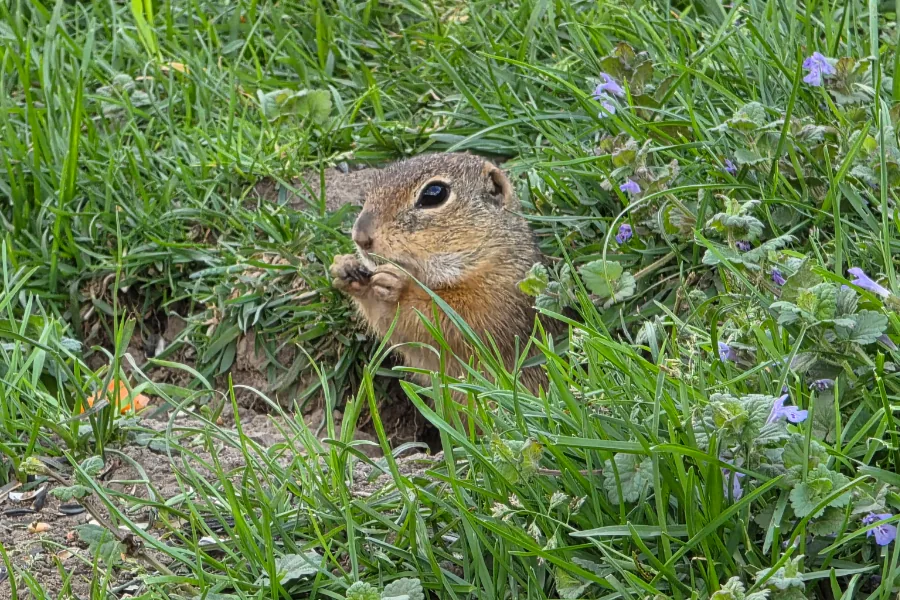
One of the biggest highlights on the plateaus of Muránska Planina National Park is watching the curious ground squirrels, which often venture surprisingly close to people. If you're coming from Hungary, it's worth stopping at the Šomoška Basalt Organ along the way, where alongside the striking volcanic rock formation you might even come across a fire salamander.