#27 · 1978Testimony to cultural tradition
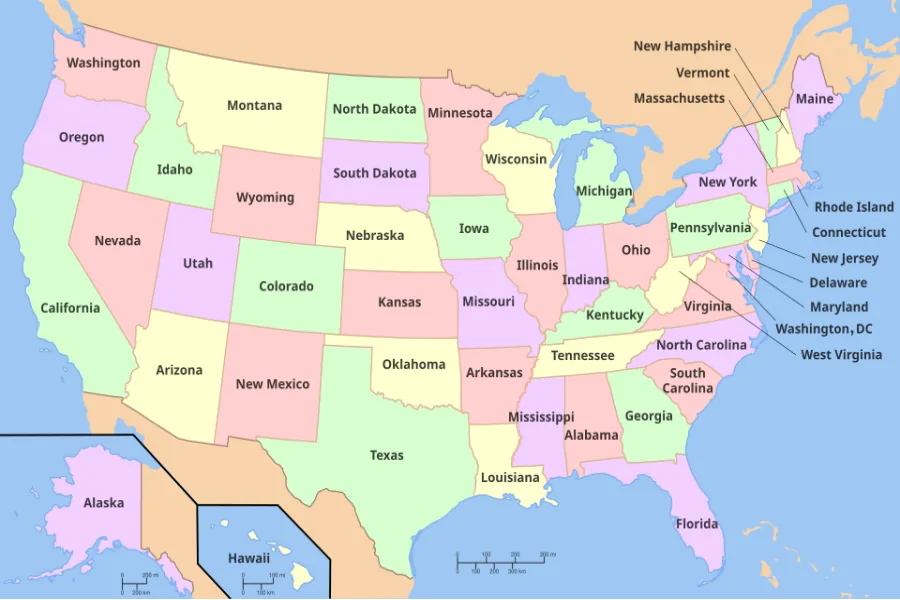
A great concentration of ancestral Pueblo Indian dwellings, built from the 6th to the 12th century, can be found on the Mesa Verde plateau in south-west Colorado at an altitude of more than 2,600 m. Some 4,400 sites have been recorded, including villages built on the Mesa top. There are also imposing cliff dwellings, built of stone and comprising more than 100 rooms.
#28 · 1978Natural beauty and aesthetic importance · Earth's history and geological processes · Ecological and biological processes · Natural habitat and biodiversity
The vast natural forest of Yellowstone National Park covers nearly 9,000 km2 ; 96% of the park lies in Wyoming, 3% in Montana and 1% in Idaho. Yellowstone contains half of all the world's known geothermal features, with more than 10,000 examples. It also has the world's largest concentration of geysers (more than 300 geyers, or two thirds of all those on the planet). Established in 1872, Yellowstone is equally known for its wildlife, such as grizzly bears, wolves, bison and wapitis.
#72 · 1979Natural beauty and aesthetic importance · Earth's history and geological processes · Ecological and biological processes · Natural habitat and biodiversityTransboundary site
These parks comprise an impressive complex of glaciers and high peaks on both sides of the border between Canada (Yukon Territory and British Columbia) and the United States (Alaska). The spectacular natural landscapes are home to many grizzly bears, caribou and Dall's sheep. The site contains the largest non-polar icefield in the world.
#75 · 1979Natural beauty and aesthetic importance · Earth's history and geological processes · Ecological and biological processes · Natural habitat and biodiversity
Carved out by the Colorado River, the Grand Canyon (nearly 1,500 m deep) is the most spectacular gorge in the world. Located in the state of Arizona, it cuts across the Grand Canyon National Park. Its horizontal strata retrace the geological history of the past 2 billion years. There are also prehistoric traces of human adaptation to a particularly harsh environment.
#76 · 1979Earth's history and geological processes · Ecological and biological processes · Natural habitat and biodiversity⚠ On the Danger List
This site at the southern tip of Florida has been called 'a river of grass flowing imperceptibly from the hinterland into the sea'. The exceptional variety of its water habitats has made it a sanctuary for a large number of birds and reptiles, as well as for threatened species such as the manatee.
#78 · 1979
The Declaration of Independence (1776) and the Constitution of the United States (1787) were both signed in this building in Philadelphia. The universal principles of freedom and democracy set forth in these documents are of fundamental importance to American history and have also had a profound impact on law-makers around the world.
#134 · 1980Natural beauty and aesthetic importance · Ecological and biological processes
Redwood National Park comprises a region of coastal mountains bordering the Pacific Ocean north of San Francisco. It is covered with a magnificent forest of coastal redwood trees, the tallest and most impressive trees in the world. The marine and land life are equally remarkable, in particular the sea lions, the bald eagle and the endangered California brown pelican.
#150 · 1981Natural beauty and aesthetic importance · Earth's history and geological processes · Natural habitat and biodiversity
Mammoth Cave National Park, located in the state of Kentucky, has the world's largest network of natural caves and underground passageways, which are characteristic examples of limestone formations. The park and its underground network of more than 560 surveyed km of passageways are home to a varied flora and fauna, including a number of endangered species.
#151 · 1981Natural beauty and aesthetic importance · Ecological and biological processes
Located in the north-west of Washington State, Olympic National Park is renowned for the diversity of its ecosystems. Glacier-clad peaks interspersed with extensive alpine meadows are surrounded by an extensive old growth forest, among which is the best example of intact and protected temperate rainforest in the Pacific Northwest. Eleven major river systems drain the Olympic mountains, offering some of the best habitat for anadromous fish species in the country. The park also includes 100 km of wilderness coastline, the longest undeveloped coast in the contiguous United States, and is rich in native and endemic animal and plant species, including critical populations of the endangered northern spotted owl, marbled murrelet and bull trout.
#198 · 1982Testimony to cultural tradition · Outstanding architectural ensemble
Cahokia Mounds, some 13 km north-east of St Louis, Missouri, is the largest pre-Columbian settlement north of Mexico. It was occupied primarily during the Mississippian period (800–1400), when it covered nearly 1,600 ha and included some 120 mounds. It is a striking example of a complex chiefdom society, with many satellite mound centres and numerous outlying hamlets and villages. This agricultural society may have had a population of 10–20,000 at its peak between 1050 and 1150. Primary features at the site include Monks Mound, the largest prehistoric earthwork in the Americas, covering over 5 ha and standing 30 m high.
#266 · 1983
Between the 16th and 20th centuries, a series of defensive structures was built at this strategic point in the Caribbean Sea to protect the city and the Bay of San Juan. They represent a fine display of European military architecture adapted to harbour sites on the American continent.
#259 · 1983Natural beauty and aesthetic importance · Earth's history and geological processes · Ecological and biological processes · Natural habitat and biodiversity
Stretching over more than 200,000 ha, this exceptionally beautiful park is home to more than 3,500 plant species, including almost as many trees (130 natural species) as in all of Europe. Many endangered animal species are also found there, including what is probably the greatest variety of salamanders in the world. Since the park is relatively untouched, it gives an idea of temperate flora before the influence of humankind.
#307 · 1984Masterpiece of human creative genius
Made in Paris by the French sculptor Bartholdi, in collaboration with Gustave Eiffel (who was responsible for the steel framework), this towering monument to liberty was a gift from France on the centenary of American independence. Inaugurated in 1886, the sculpture stands at the entrance to New York Harbour and has welcomed millions of immigrants to the United States ever since.
#308 · 1984Natural beauty and aesthetic importance · Earth's history and geological processes
Yosemite National Park lies in the heart of California. With its 'hanging' valleys, many waterfalls, cirque lakes, polished domes, moraines and U-shaped valleys, it provides an excellent overview of all kinds of granite relief fashioned by glaciation. At 600–4,000 m, a great variety of flora and fauna can also be found here.
#409 · 1987Earth's history and geological processes
This site contains two of the most active volcanoes in the world, Mauna Loa (4,170 m high) and Kilauea (1,250 m high), both of which tower over the Pacific Ocean. Volcanic eruptions have created a constantly changing landscape, and the lava flows reveal surprising geological formations. Rare birds and endemic species can be found there, as well as forests of giant ferns.
#353 · 1987Testimony to cultural tradition
For over 2,000 years, Pueblo peoples occupied a vast region of the south-western United States. Chaco Canyon, a major centre of ancestral Pueblo culture between 850 and 1250, was a focus for ceremonials, trade and political activity for the prehistoric Four Corners area. Chaco is remarkable for its monumental public and ceremonial buildings and its distinctive architecture – it has an ancient urban ceremonial centre that is unlike anything constructed before or since. In addition to the Chaco Culture National Historical Park, the World Heritage property includes the Aztec Ruins National Monument and several smaller Chaco sites managed by the Bureau of Land Management.
#442 · 1987Masterpiece of human creative genius · Outstanding architectural ensemble
Thomas Jefferson (1743–1826), author of the American Declaration of Independence and third president of the United States, was also a talented architect of neoclassical buildings. He designed Monticello (1769–1809), his plantation home, and his ideal 'academical village' (1817–26), which is still the heart of the University of Virginia. Jefferson's use of an architectural vocabulary based upon classical antiquity symbolizes both the aspirations of the new American republic as the inheritor of European tradition and the cultural experimentation that could be expected as the country matured.
#492 · 1992Outstanding architectural ensemble
Situated in the valley of a small tributary of the Rio Grande, this adobe settlement – consisting of dwellings and ceremonial buildings – represents the culture of the Pueblo Indians of Arizona and New Mexico.
#721 · 1995Natural beauty and aesthetic importance · Earth's history and geological processes
This karst landscape in the state of New Mexico comprises over 80 recognized caves. They are outstanding not only for their size but also for the profusion, diversity and beauty of their mineral formations. Lechuguilla Cave stands out from the others, providing an underground laboratory where geological and biological processes can be studied in a pristine setting.
#354 · 1995Natural beauty and aesthetic importance · Ecological and biological processesTransboundary site
In 1932 Waterton Lakes National Park (Alberta, Canada) was combined with the Glacier National Park (Montana, United States) to form the world's first International Peace Park. Situated on the border between the two countries and offering outstanding scenery, the park is exceptionally rich in plant and mammal species as well as prairie, forest, and alpine and glacial features.
#1326 · 2010Testimony to cultural tradition · Earth's history and geological processes · Ecological and biological processes · Natural habitat and biodiversity
Papahānaumokuākea is a vast and isolated linear cluster of small, low lying islands and atolls, with their surrounding ocean, roughly 250 km to the northwest of the main Hawaiian Archipelago and extending over some 1931 km. The area has deep cosmological and traditional significance for living Native Hawaiian culture, as an ancestral environment, as an embodiment of the Hawaiian concept of kinship between people and the natural world, and as the place where it is believed that life originates and to where the spirits return after death. On two of the islands, Nihoa and Makumanamana, there are archaeological remains relating to pre-European settlement and use. Much of the monument is made up of pelagic and deepwater habitats, with notable features such as seamounts and submerged banks, extensive coral reefs and lagoons. It is one of the largest marine protected areas (MPAs) in the world.
#1435 · 2014Testimony to cultural tradition
Monumental Earthworks of Poverty Point owes its name to a 19th-century plantation close to the site, which is in the Lower Mississippi Valley on a slightly elevated and narrow landform. The complex comprises five mounds, six concentric semi-elliptical ridges separated by shallow depressions and a central plaza. It was created and used for residential and ceremonial purposes by a society of hunter fisher-gatherers between 3700 and 3100 BP. It is a remarkable achievement in earthen construction in North America that was unsurpassed for at least 2,000 years.
#1468 · 2015Testimony to cultural tradition · Outstanding architectural ensembleTransboundary site
This transnational serial property comprises four congregational settlements in four countries representing the transnational scope and consistency of the international Moravian community as a global network of the Moravian Church: Christiansfeld (Denmark), Herrnhut (Germany), Gracehill (United Kingdom of Great Britain and Northern Ireland) and Bethlehem (United States of America). These settlements were established according to overarching planning principles that reflected the ideals of the Moravian Church, as expressed in their plans and democratic organisation. Each architectural ensemble bears witness to the Moravian Church’s vision of a unified, coherent urban design, inspired by the concept of an “ideal city” developed by the Church during its formative phase in the 18th and beginning of the 19th enturies. Distinctive Moravian buildings include a particular type of Gemeinhaus (congregation building), church, choir houses, as well as a nearby God’s Acre (cemetery). Each settlement has its own architectural character based on an original Moravian Church Civic Baroque style but adapted to local conditions. Present today in each component part is an active congregation whose continuation of traditions forms a living Moravian heritage.
#1466 · 2015Interchange of human values
The site encompasses a group of five frontier mission complexes situated along a stretch of the San Antonio River basin in southern Texas, as well as a ranch located 37 kilometres to the south. It includes architectural and archaeological structures, farmlands, residencies, churches and granaries, as well as water distribution systems. The complexes were built by Franciscan missionaries in the 18th century and illustrate the Spanish Crown’s efforts to colonize, evangelize and defend the northern frontier of New Spain. The San Antonio Missions are also an example of the interweaving of Spanish and Coahuiltecan cultures, illustrated by a variety of features, including the decorative elements of churches, which combine Catholic symbols with indigenous designs inspired by nature.
#1496 · 2019Interchange of human values
The property consists of eight buildings in the United States designed by the architect during the first half of the 20th century. These include well known designs such as Fallingwater (Mill Run, Pennsylvania) and the Guggenheim Museum (New York). All the buildings reflect the ‘organic architecture’ developed by Wright, which includes an open plan, a blurring of the boundaries between exterior and interior and the unprecedented use of materials such as steel and concrete. Each of these buildings offers innovative solutions to the needs for housing, worship, work or leisure. Wright's work from this period had a strong impact on the development of modern architecture in Europe.
#1689 · 2023Masterpiece of human creative genius · Testimony to cultural tradition
This property is a series of eight monumental earthen enclosure complexes built between 2,000 and 1,600 years ago along the central tributaries of the Ohio River. They are the most representative surviving expressions of the Indigenous tradition now referred to as the Hopewell culture. Their scale and complexity are evidenced in precise geometric figures as well as hilltops sculpted to enclose vast, level plazas. There are alignments with the cycles of the Sun and the far more complex cycles of the Moon. These earthworks served as ceremonial centres and the sites have yielded finely crafted ritual objects fashioned from exotic raw materials obtained from distant places.